Your cart is currently empty!
Techniques for Joining Wood Without Using Metal Fasteners

When you look at an antique chair or a high-end table, you rarely see screw heads or nails marring the surface. That clean, uninterrupted look is the mark of true craftsmanship. While screws and nails have their place—especially when you need speed—learning techniques for joining wood without using metal fasteners can take your projects from simple assembly to heirloom quality. Here are some time-tested ways to join wood that don’t involve a trip to the hardware aisle for screws.
The Classic Dowel Joint
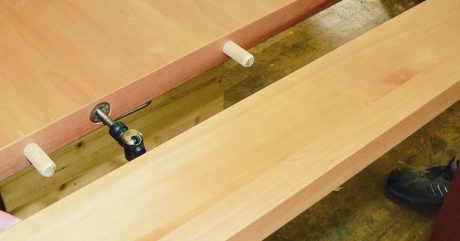
If you’re looking for an alternative to screws, start here. A dowel joint uses small, round wooden pegs—dowels—inserted into matching holes in two pieces of wood. The dowels act like internal skeletons; they reinforce the bond and keep parts in alignment. This joint is simple, effective, and completely hidden once the glue dries.
Here’s how you pull it off:
- Mark your spots: Line up your two pieces of wood exactly how you want them joined. Use a square to mark a line across both pieces where the dowels will go.
- Drill the holes: You need a drill bit that matches the diameter of your dowel exactly. Drill into the center of the edge on both pieces. A doweling jig is a huge help here to keep the drill straight.
- Add glue: Squeeze wood glue into the holes and along the mating surfaces.
- Insert dowels: Tap the dowels into the holes on one piece.
- Clamp it up: Push the second piece onto the protruding dowels and clamp the whole assembly tight until the glue dries.
The Mortise and Tenon
If you want strength, this is the heavyweight champion of joinery. It’s been used for thousands of years in everything from timber frame barns to delicate chairs. To create this joint, a “tenon” (or tongue) is cut on the end of one board and fitted into a “mortise” (or slot) cut into the other.
This creates a massive amount of glue surface area, which is why it holds so well. It also resists twisting forces better than almost any other joint.
To create a basic mortise and tenon:
- Measure your stock: The tenon should be about one-third the thickness of the wood.
- Cut the tenon: Use a table saw or a handsaw to cut away the cheeks (the sides) of the wood, leaving a rectangular tongue in the center.
- Mark the mortise: Place the tenon against the piece it will join to mark the exact width and location.
- Excavate the mortise: You can use a dedicated mortising machine, a drill press with a chisel, or just a drill and a hand chisel to hollow out the rectangular slot.
- Test fit: It should be snug but not so tight that you have to hammer it hard. If it’s too loose, the glue won’t hold well.
- Glue and assemble: Apply glue to the tenon cheeks and inside the mortise, slide them together, and clamp.
The Dovetail Joint
This is the show-off joint. Dovetails are famous for their interlocking “tails” and “pins” that look like a puzzle. They’re most commonly seen on drawer fronts. Because of the trapezoidal shape of the tails, the joint is mechanically locked in one direction—you physically can’t pull it apart without breaking the wood.
While they look complex, they’re very logical once you understand the geometry.
Here’s a breakdown:
- Mark the tails: Lay out the triangular shapes on the end of one board.
- Cut the tails: Use a fine-toothed saw to cut down the lines, then remove the waste wood between them with a coping saw or chisel.
- Transfer marks: Place the cut tails over the end of the second board (the pin board) and trace the shape. This guarantees a perfect match.
- Cut the pins: Saw on the waste side of your lines on the second board and chisel out the waste.
- Assemble: Apply glue and tap the joint together. You shouldn’t need clamps if the fit is right; the mechanical lock holds it tight.
The Half-Lap Joint
This joint is easy to learn and master, but don’t underestimate it. A half-lap is where you remove half the thickness of the wood from each of the two pieces where they cross. When you put them together, the total thickness equals the original board thickness.
It’s mostly used for frames or anywhere two pieces cross each other. It provides a lot of face-grain glue surface, which is the strongest bond you can get.
Here’s how to do it:
- Mark the width: Lay one board across the other to mark exactly how wide the cut needs to be.
- Set the depth: Set your saw blade height to exactly half the thickness of your wood.
- Cut the shoulders: Make a cut at each end of the marked area.
- Clear the waste: Make repeated cuts between your shoulder lines to remove the material, then clean up the bottom with a chisel so it is flat.
- Repeat: Do the same for the other piece.
- Join: Glue the two flat surfaces and clamp them.
The Bridle Joint
The bridle joint is a cross between a mortise and tenon and a half-lap. It’s used heavily in frame construction, like for cabinet doors or table legs. You cut a slot (the mortise) into the end of one board, but unlike a standard mortise, this one is open on three sides. The other board gets a tenon that fits into that slot.
This exposes the end grain, which can be a nice visual detail, and it offers great strength against racking.
Here’s the technique:
- Mark your thirds: Divide the thickness of your wood into thirds.
- Cut the open mortise: On the first board, remove the center third of the material at the end.
- Cut the tenon: On the second board, remove the outer two-thirds, leaving the center standing.
- Fit and glue: The tenon should slide snugly into the open mortise. Add glue to the cheeks and clamp.
Choosing the Right Approach
Learning techniques for joining wood without using metal fasteners opens up a new world of design possibilities. You stop worrying about hiding screw heads and start thinking about how the joint itself contributes to the beauty and strength of the piece. It takes a bit more patience than driving a screw, but the result is furniture that feels solid, looks professional, and lasts for generations.
If you need furniture assembly hardware for your next wood project, come and shop at KNAPP Connectors. If you don’t want to use metal fasteners to join wood, we have plastic dowels that lock in place without glue or clamps. You can use them to create the classic dowel joint. But if you decide metal is what you need for a specific application, we have products for that, too. Our metal fasteners provide a clean, no-nails look so you can finish your work faster without compromising on the appearance of the finished product. Stock up today!