The Pros and Cons of Using Knock-Down Hardware
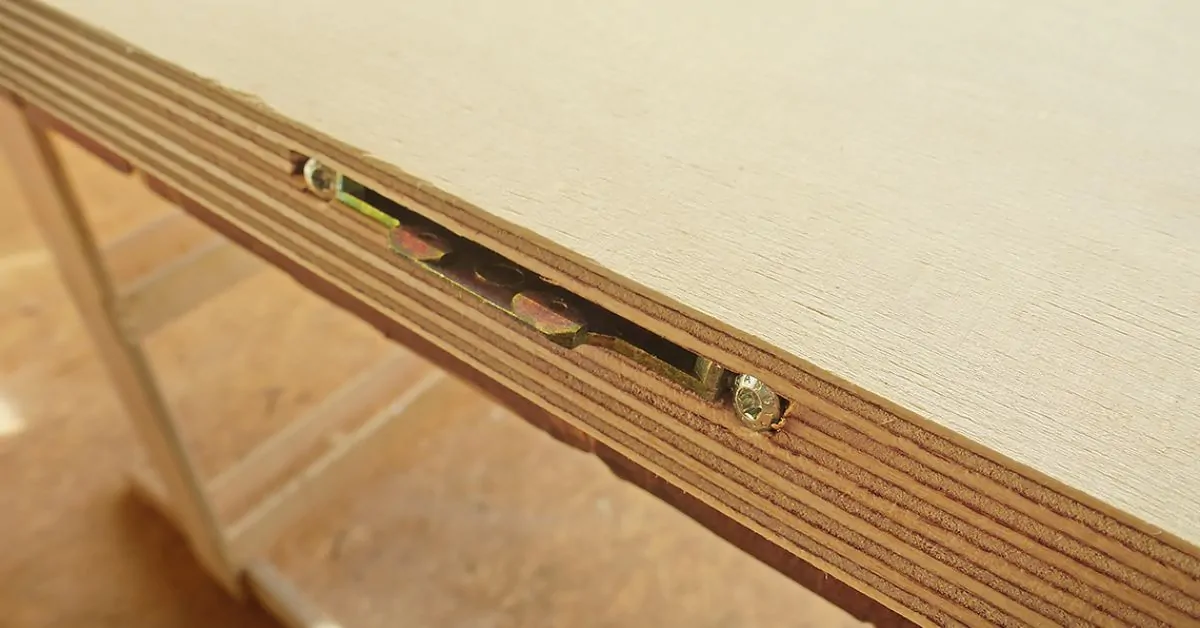
Ready-to-assemble (RTA) furniture has become increasingly popular over the years, transforming from a niche market into a global standard. Whether you manufacture high-end architectural millwork or simply enjoy building bookshelves on a Saturday afternoon, knock-down fittings can play a massive role in your projects.
But as with other hardware options, using knock-down hardware has some pros and cons. Let’s break down the mechanics, logistics, and aesthetics to help you decide whether these fasteners deserve a spot in your next project.
Defining the Mechanics of Knock-Down Fittings
Knock-down hardware refers to joinery designed for temporary or permanent assembly without traditional glue-and-clamp methods. Instead of relying on permanent wood glue that bonds fibers until the end of time, these fasteners use screws, bolts, cams, or snap-in mechanisms to hold pieces together.
This technology allows manufacturers to produce the necessary components, ship them flat, and let someone else handle the final construction. It sounds simple, but the engineering behind a locking dowel or a snap-in biscuit connector involves precise tolerances. No matter the fitting, the goal of creating a rigid joint that acts permanent but offers the flexibility of disassembly remains constant.
Simplifying Logistics and Transportation Costs
Shipping can cost a fortune if not done properly. If you ship a fully assembled wardrobe, for example, you end up paying for the empty space inside it. Knock-down hardware eliminates this financial black hole. By packing components flat, manufacturers maximize shipping space and minimize the potential for shipping damage.
For the end-user or the installer, this logistical magic trick changes the game. For instance, the end-user can maneuver a disassembled entertainment center through a narrow hallway without scratching the wall paint or removing a door frame. This efficiency extends beyond moving boxes, as it ultimately reduces the carbon footprint of the furniture industry. Fewer trucks on the road carrying optimized loads equals a happier planet.
Achieving Invisible Connections for Modern Aesthetics
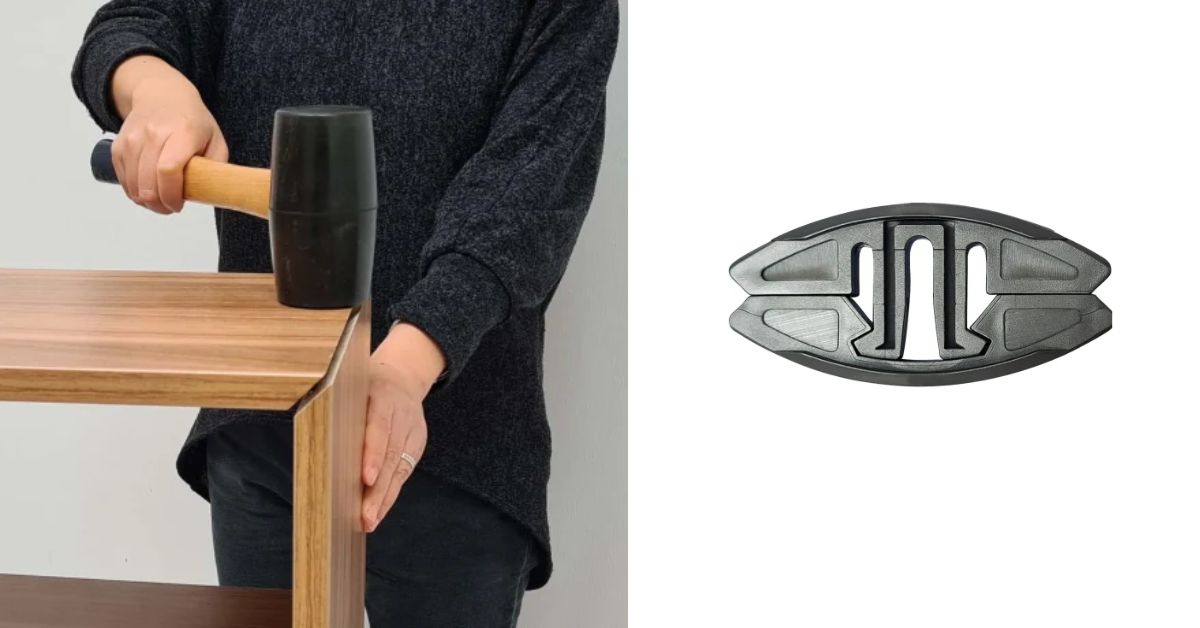
One major criticism of early RTA furniture was that it involved exposed screw heads or plastic caps that never quite matched the wood grain. Modern engineering has solved this visual crime. High-quality carpentry connectors now hide entirely within the wood, preserving the optical quality of the piece.
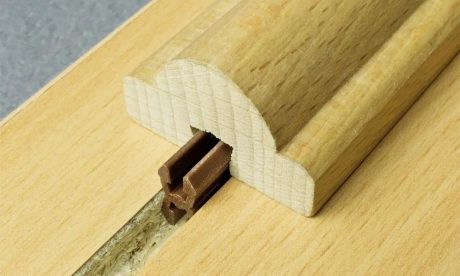
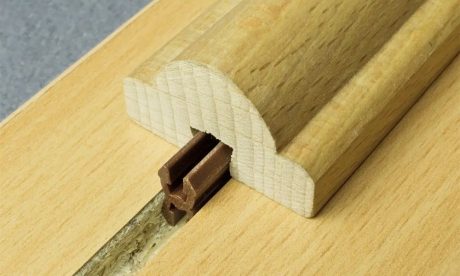
Take the KLICK system or similar concealed fasteners as prime examples. You can route a dovetail groove, pop the component in, and suddenly you have a seamless joint—no visible holes, no putty, and no sanding. This approach really appeals to architects and designers who demand clean lines.
Accelerating Production and Site Installation
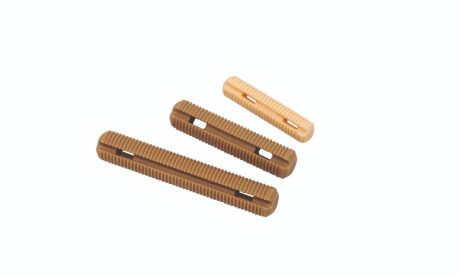
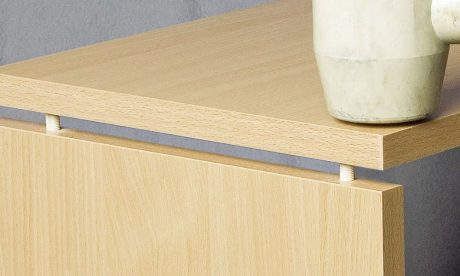
Time creates the biggest expense in any shop since waiting for glue to dry slows down the work process considerably. Fortunately, knock-down hardware removes the bottleneck of glue-and-clamp time. Using a connector like the QUICK-SET locking dowel means you can insert the hardware and move immediately to the next step.
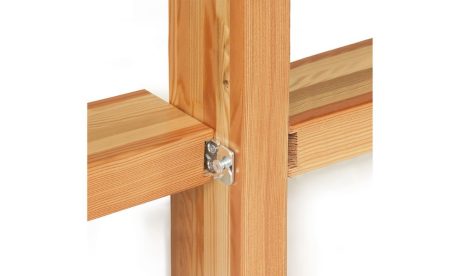
For on-site installations, this speed translates to profit. Architectural millworkers can prep everything in the shop, drive the parts to the jobsite, and snap the panels together using slide-in connectors like the CHICO or hook connectors like the DUO system. This prefabrication reduces the amount of noise, dust, and time spent at the client’s location. Ultimately, you look more professional and you finish the job faster, turning a multi-day installation into a few hours of assembly.
Navigating the Potential for Structural Weakness
We must address the elephant in the room: the wobble. Everyone has likely encountered a cheap bookshelf that sways like a tree in the wind after only a few years of use. This movement usually stems from low-quality hardware or poor material choices, like low-density particle board that crumbles around the screw threads.
Traditional joinery—such as mortise and tenon, dovetails, or glue—creates a bond that often becomes stronger than the wood itself. Meanwhile, knock-down hardware relies on the mechanical grip of the fastener. If that grip fails, or if the user repeatedly assembles and disassembles the piece using screws that bite directly into the wood, the joint will eventually degrade.
Distinguishing between big box hardware and industrial-grade solutions solves this issue. Steel hook connectors and high-strength plastic dowels with threaded ribs offer exceptional holding power. They resist rotting and weathering, making them suitable even for outdoor applications. The key lies in selecting hardware that is engineered for longevity rather than just the lowest price point.
Overcoming the Learning Curve of Assembly
We have all heard the jokes about leftover screws and confusing project diagrams. Knock-down hardware shifts the process of assembly from the craftsman to the installer or the consumer. But if the manufacturer drills a hole a millimeter off, or if the user misinterprets an instruction, the result may look disastrous.
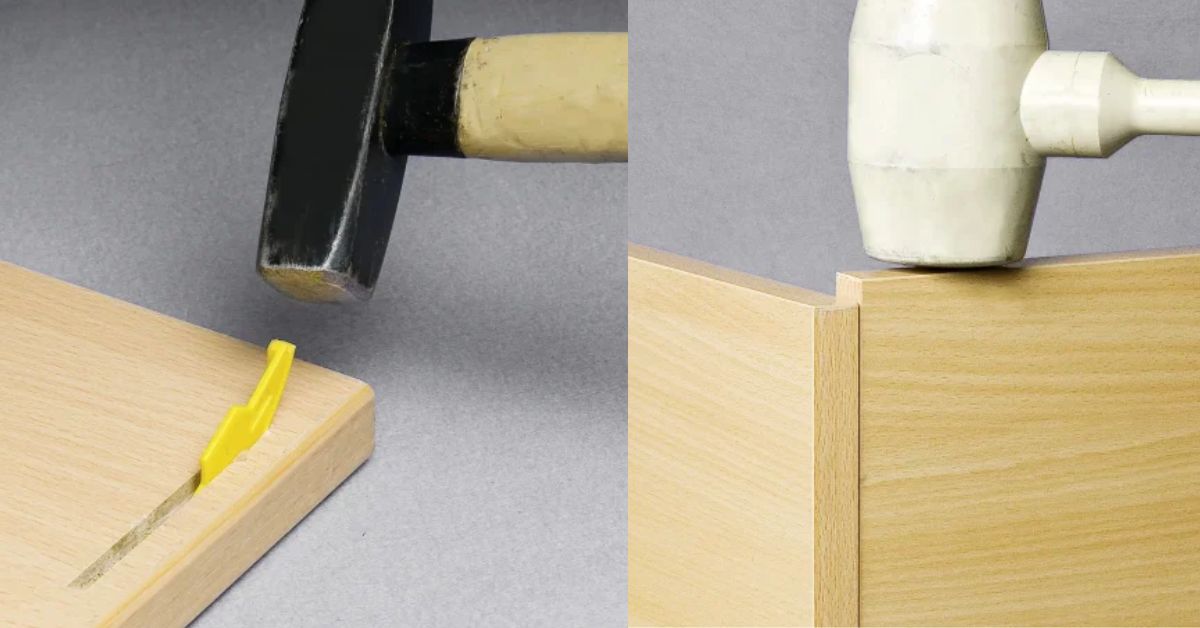
Complex systems call for precise machining, and using a biscuit connector like the CHAMP or FAST requires a specific slot cutter or router. If a shop lacks the proper jigs or CNC machinery, implementing these systems becomes more challenging. Accuracy is nonnegotiable. While glue fills gaps and hides minor imperfections in traditional woodworking, mechanical fasteners demand perfection.
Furthermore, the potential for user error remains high. A cam lock tightened with the force of Thor will strip the wood, while a dowel inserted at an angle will crack the panel. Manufacturers must provide clear instructions and foolproof hardware designs to mitigate these risks.
Finding the Right Connection for Your Project
The choice between traditional construction and knock-down hardware rarely offers a straightforward answer since it depends on the application. For a family heirloom dining table meant to last for generations, traditional joinery wins. For a trade show booth that needs to be shipped across the country, or for architectural wall panels that require fast installation, knock-down hardware reigns supreme.
The evolution of these fasteners—from simple screws to complex, self-tightening dovetail clips—proves that convenience does not have to sacrifice quality. By recognizing the pros and cons of using knock-down hardware systems like the DUO, KLICK, and QUICK-SET, you can leverage the benefits of speed and aesthetics while avoiding the pitfalls of structural instability. Choose your knock-down hardware wisely, and your furniture will stand tall and strong for years to come.