Your cart is currently empty!
A Guide to Different Types of Wood Joints

Learning the basics of wood joinery will elevate your woodworking to professional status. Each joint brings its own personality to the party: some prioritize strength, others favor aesthetics, and a few even multitask. Understanding when and how to use each joint type will expand your creative possibilities and help your projects stand the test of time.
Whether it’s for a well-crafted birdhouse or custom cabinetry, the right joint is the difference between a wobbly disaster and a rock-solid success. Use this helpful guide on the different types of wood joints that every woodworker should know.
Butt Joints
The butt joint is one of woodworking’s most straightforward connections. You simply place one piece of wood against another at a right angle, then secure the pieces with glue, screws, or nails. Think of it as the handshake of wood joints; simple, direct, and universally understood.
Butt joints are the ideal choice for basic projects like picture frames, boxes, and beginner furniture pieces. Since they require minimal skill and tools, these joints are a great option for those making their first foray into woodworking.
However, butt joints rely entirely on mechanical fasteners for strength since the end grain doesn’t glue well to the face grain. To maximize butt joint strength, reinforce them with corner brackets, dowels, or biscuits.
Mortise and Tenon
When it comes to strength, the mortise-and-tenon joint reigns supreme. This joint has a projecting piece (the tenon) that fits snugly into a corresponding hole (the mortise). Ancient artisans used this technique to build structures that still stand today, proving the incredible durability of the mortise-and-tenon joint.
You create a tenon by cutting away material to form a tongue on one piece of wood. The mortise requires precision drilling or chiseling to create a perfectly sized cavity. When done correctly, this joint creates an almost unbreakable bond that strengthens over time as the wood fibers compress and lock together.
Mortise-and-tenon joints shine in chair construction, table legs, and timber framing. You can cut them by hand for a traditional approach or use modern machinery for consistent results. Either way, these joints demand patience and precision and reward you with unmatched strength and longevity.
Dovetail Joints
Dovetail joints combine mechanical strength with visual appeal, creating connections that resist pulling forces while showcasing your woodworking skills. The distinctive wedge-shaped “tails” interlock with corresponding “pins” to form a joint that grows stronger under tension.
You’ll recognize dovetails from their use in high-quality drawer construction, where they prevent the corners from separating, even after years of consistent opening and closing. The angled cuts create a mechanical lock that eliminates the need for additional fasteners, though glue adds extra security.
Hand-cut dovetails truly demonstrate the pinnacle of traditional woodworking skill, requiring sharp chisels and steady hands. On the other hand, router jigs offer a modern shortcut for consistent results, though many purists argue that perfectly uniform dovetails lack the character of hand-cut variations.
Dado and Groove Joints
These joints create strong, precise connections for shelving and panel work. A dado runs across the grain, while a groove follows the grain’s direction. Both involve cutting a channel in one piece to receive another piece of wood.
You’ll use dados extensively in bookshelf construction, where they support shelf weight far better than simple brackets. Kitchen cabinets also rely on dado joints to secure fixed shelves and create rigid box structures. The increased glue surface area provides excellent bonding strength.
Router tables can cut consistent dados and grooves, though you can achieve similar results with circular saws and a careful setup. If you’re doing production work, you may consider stacking dado blades on table saws for improved efficiency.
Lap Joints
Lap joints overlap two pieces of wood by removing material from each piece to maintain a consistent thickness. This technique creates a strong glue joint with substantial surface area so your project is dimensionally accurate.
The different types of lap joints include:
- Half-lap joints: These joints have equal overlaps because they’re cut halfway through each piece.
- Full-lap joints: Full-lap joints remove material from only one piece, allowing the other to sit flush.
- Cross-lap joints: This joint type enables perpendicular intersections in grid-like structures.
You’ll appreciate lap joints most in face frame construction, picture frame corners, and anywhere you need strong corners without complex cutting. They especially come in handy for building jigs and shop fixtures that need quick assembly and reliable strength.
Concealed Fasteners
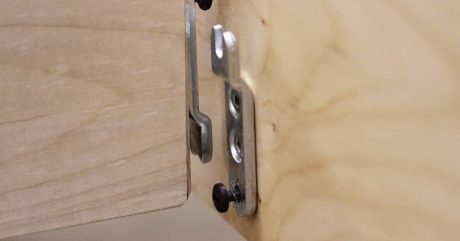
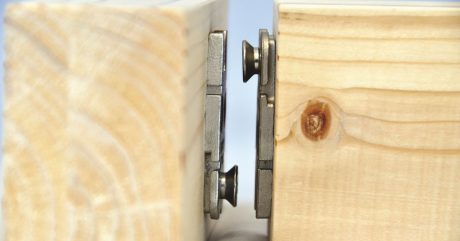
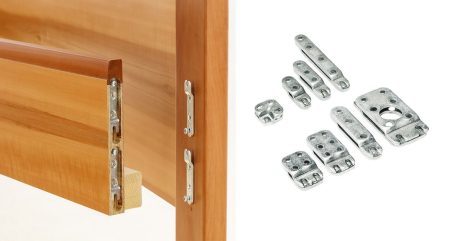
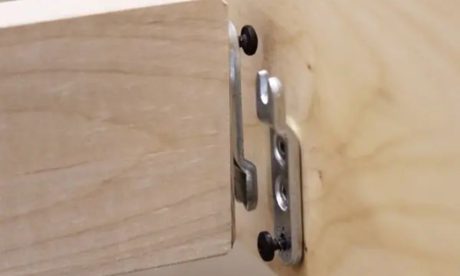
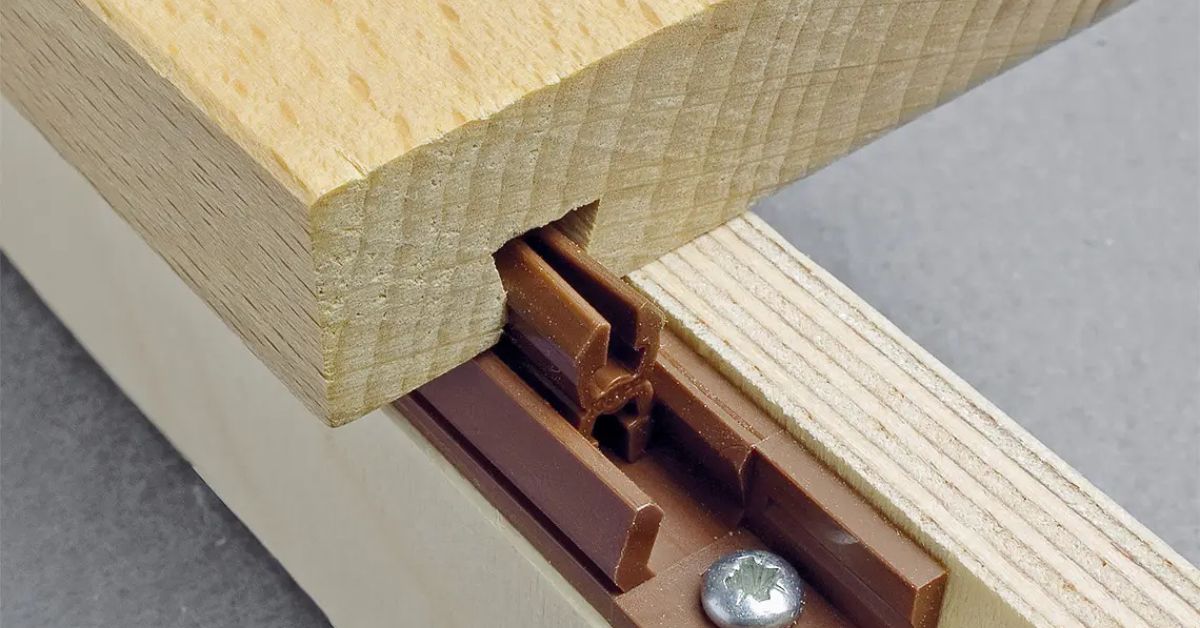
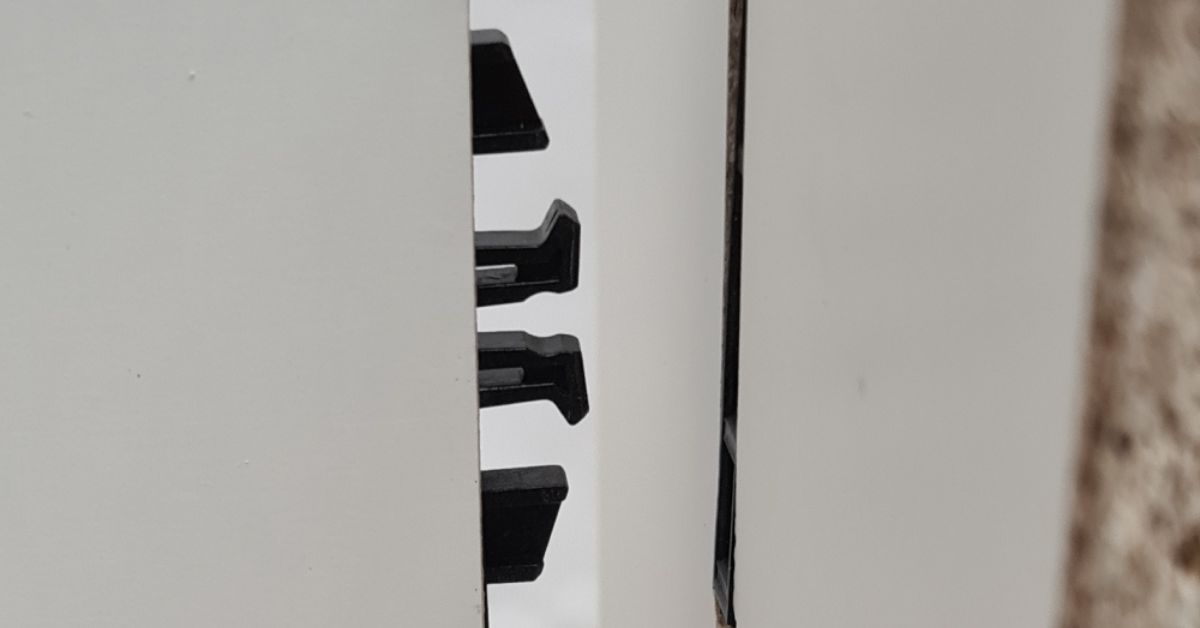
Traditional joinery methods dominate woodworking education, but concealed fasteners are a modern alternative that helps you save time and get professional results. These hardware solutions hide mechanical connections while providing excellent strength and adjustability.
Pocket Screws
By drilling angled holes that allow screws to pull pieces together from behind, pocket screws create extremely strong joints. You’ll find pocket screw joinery invaluable for face frames, cabinet doors, and quick furniture assembly. The Kreg jig system revolutionized this technique by making accurate pocket holes accessible to every woodworker.
Confirmat Screws
These screws excel in cabinet construction, providing removable connections for European-style cabinetry. Where traditional wood screws might split the material, Confirmat screws thread into cross-grain applications.
Biscuit Joiners
Biscuit joiners cut matching slots in adjoining pieces, then use compressed wood wafers that expand when exposed to moisture from the glue. This system aligns panels perfectly while adding a large glue surface area. You’ll find biscuits particularly useful for edge-gluing panels and assembling face frames.
Advanced Joinery
Japanese joinery techniques offer incredibly strong connections without requiring metal fasteners. These joints often feature complex interlocking geometry that creates mechanical advantages while showcasing exceptional artisanship.
Finger joints are an advanced joint that creates strong end-to-end connections for boards that need to span longer distances than available lumber allows. The multiple interlocking fingers provide a substantial glue surface area and mechanical strength.
To create connections that resist pulling and twisting forces, sliding dovetails combine the strength of dovetails with the convenience of dados. You’ll find these joints invaluable in bookcase construction or anywhere you need removable yet secure connections.
Bringing It All Together
Now that you’re familiar with the different types of wood joints, the possibilities are endless for your future projects. If you’re new to woodworking, simply start with basic joints like butt joints and dados to build confidence, then gradually tackle more complex connections as your skills develop.
Additionally, practice each joint type on scrap wood before committing to your final project. Perfect execution comes through repetition and attention to detail. Remember, even the top artisans continue learning new techniques throughout their careers. Choose your joints wisely, execute them carefully, and watch your woodworking transform from hobby to artistry.
Are you ready to get started on your next project? Head over to Knapp Connectors to find the perfect woodworking joints for your needs.